
15. What kind of a mediator and redeemer then must we seek? One who is a true1 and righteous man, 2 and yet more powerful than all creatures, that is, One who is also true God.3 11 Cor 15:21, 22, 25, 26. . . . Continue reading →
works
Audio: Faith Apart From Works is Dead
Kim Riddlebarger explains.
Preaching Christ: WSC Alumnus Jody Lucero '04
Abraham’s Obedience: Tried and True
More "Lutheranism" in Reformed Orthodoxy?
Melchior Leydecker and John Brown on distinguishing grace and works.
Office Hours: Fesko on the Fruit of the Spirit, Isaiah, and Practical Arminianism
In this episode Office Hours talks with Dr John Fesko, Academic Dean and Associate Professor of Systematic Theology at WSC and author of The Fruit of the Spirit Is about the nature of the Christian life and especially about whether sanctification (growth . . . Continue reading →
Calvin On A Mistaken Confidence In Works
We, too, when treating of the righteousness of faith, do not contend against the substance of works, but against that quality with which the sophists invest them,1 inasmuch as they contend that men are justified by them. Paul, therefore, divested himself—not of . . . Continue reading →
The Old Covenant

One of the most difficult questions in describing the history of redemption is to give a clear, concise, account of the differences between the old and new covenants. When I say “old covenant” I’m not referring to everything that happened before the . . . Continue reading →
Works And Grace In The Judgment
What this all means is that justification is God’s final judgment. As Wilfried Joest writes, “there is no second decision after justification.” In the language of the Reformation, the “sole and sufficient basis” for our justification before God’s eschatological tribunal is Jesus . . . Continue reading →
Calvin: Resolutely Adhere To The Exclusive Particle
When you are engaged in discussing the question of justification, beware of allowing any mention to be made of love or of works, but resolutely adhere to the exclusive particle. John Calvin | Commentary on Galatians 5:6, (1548) RESOURCES Subscribe To The . . . Continue reading →
What Is True Faith? (10) A Glorious Omission

In part 9 we considered the role of the gospel in the Spirit’s work of creating new life and granting faith. We saw that there is no tension between the direct, supernatural working of the Spirit and his use of means in . . . Continue reading →
Heidelcast 64: Nomism And Antinomianism (7)

The nomist wants to know whether the works he did before coming to faith are of any value. He asks, “why then, sir, it would seem that all my seeking to please God by my good works, all my strict walking according . . . Continue reading →
Berkhof On The Standard Of Final Judgment
The standard by which saints and sinners are judged will evidently be the revealed will of God. This is not the same for all. Some have been privileged above others, and this naturally adds to their responsibility, Matt 11:21–24; Rom. 2:12–16. This . . . Continue reading →
The Shield Of Works? Faith, Spiritual Warfare, And Salvation

The preacher this morning read from Ephesians 6 and Paul’s expression in 6:16 struck me relative to the current discussion about works and salvation. There is no question whether believers will do good works or whether those good works are evidence of . . . Continue reading →
Justification By Faith Alone Is A Refuge For Sinners
Since Paul knew that justification of faith is a refuge for those who lack righteousness of their own [cf. Romans chapter 5], he boldly infers that all who are justified by faith are excluded from works righteousness. But since it is certain . . . Continue reading →
Luther On The Covenant Of Works
Before Adam’s fall it was not necessary for him to have Christ, because he was righteous and without sin, just as the angels have no need of Christ. If Adam had not fallen, it would not have been necessary for Christ to . . . Continue reading →
Heidelberg 62: Works No Part Of Our Justification
Because the popular rhetoric in evangelical and even in confessional Protestant circles has frequently been that the medieval (or the Roman communion) taught justification by works and the Reformers taught justification by grace well-meaning but misguided Christians sometimes conclude that so long . . . Continue reading →
Wollebius: The Salvation Of The Righteous Depends Not On Works
X. The making of the charge is described by the metaphor of books or records in which the actions of the person who are being judged are written down. Revelation 20:12 ‘And the books were opened.’ By the word ‘books’ is to . . . Continue reading →
New In Print: William Perkins On Galatians
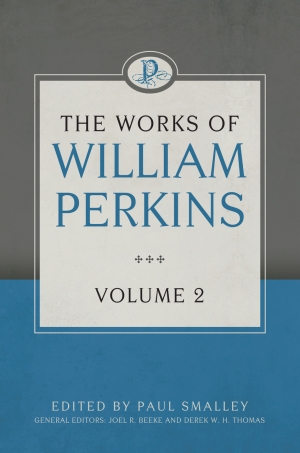
William Perkins (1558–1602) is one of the most important of the English Reformed writers of the late 16th and early 17th centuries and yet he is among the least read in the modern era. One reason for this is because his works . . . Continue reading →
Perkins: Grace Admits No Partner Or Fellow
[The Galatians] joined the works of the law with Christ and his grace in the cause of their justification and salvation. Here it must be observed that they which make a union of grace and works in the cause of justification are . . . Continue reading →
Calvin: Paul Excludes All Works, Even Those Wrought By The Spirit
This righteousness then, which God communicates to man, and accepts alone, and owns as righteousness, has been revealed, he says, without the law, that is, without the aid of the law; and the law is to be understood as meaning works; for . . . Continue reading →