
One of the crucial questions in our current moment of governmental overreaches has to do with how we understand our rights as Christians living in this world. Many of our current discussions evidence a great misunderstanding of our calling as believers in . . . Continue reading →
2021 Archive
Heidelcast 203: A Christmas Story (With A Santa Clause)

We’re interrupting our series on the Apostles’ Creed to talk about Christmas. Usually at this time of year I post or repost some of the essays on the Heidelblog about Christmas but this year I thought it might be useful to talk . . . Continue reading →
Religious Liberty Watch: University Of Iowa Pays Christian Student Group For Violating Their Civil Rights
A state panel agreed Monday to spend nearly $2 million to settle two federal lawsuits brought against the University of Iowa in 2017 after a religious group denied a gay student a leadership role. The Iowa State Appeal Board, made up of . . . Continue reading →
What Dispensationalism Misses About The Temple
This is a serious interpretive problem for those dispensationalists who argue, in effect, that redemptive history takes a U-turn in the millennial age, as the reality which is found in Christ’s fulfillment of the Old Temple imagery in his own body, supposedly returns to the types and shadows of the Old Testament. Continue reading →
The Nature And Value Of Christian Liberty
Do you ever feel like other people are better Christians than you are? Maybe they read their Bibles more, give more money to the church, pray more for others, are involved in church ministry, do more good deeds, or never seem to . . . Continue reading →
Religious Liberty And Free Speech Suffers Another Defeat As LGBTQ Lobby Continues To Demand Affirmation Of Gay Marriage
A federal court in New York dismissed a lawsuit filed by a Christian wedding photographer who refused to photograph same-sex weddings. The woman, Emilee Carpenter, filed the federal lawsuit in April, arguing that New York’s nondiscrimination laws forced her to choose between . . . Continue reading →
Five Reasons We Do Not Need Ken’s Doxology

In a recent essay I mentioned in passing that we do not need Bishop Ken’s seventeenth-century substitute (i.e., “Praise God from whom all blessings flow…”) for the Psalms since there are five doxologies inspired by the Holy Spirit and included in the Psalter . . . Continue reading →
Jon Payne: How Can An Ordained Officer Be Above Reproach If He Maintains A Settled, Gay Identity?
The Bible teaches that ordained officers in Christ’s church must be above reproach and Christlike in character.
UK Christians Respond To Proposal To Ban “Conversion Therapy”
These Laws Already Exist In Some US States
We are Christian ministers and pastoral workers from a broad range of churches, who have in common that we hold to orthodox, historic Christian teaching on sexual ethics. We are writing in response to the consultation on ‘Banning “Conversion Therapy”’ presented by . . . Continue reading →
Big Bird And Despair In The Big Apple

In October, 1982, Will Lee, who played the beloved “Mr Hooper” character on Sesame Street, died. In November, 1983 the show had to address his absence and explain it to their young views. The show was aimed at 3–4 year olds. Here is how they did it: Continue reading →
What’s Going on Right Now: Sex, Race, Politics, & Power with W Robert Godfrey (7)

This is the seventh session of Bob Godfrey’s Adult Sunday School series at the Escondido URC. In this session he explores the challenges faced by Christendom due to the Enlightenment and how it took shape in America. He argues that Christianity as . . . Continue reading →
What Did Geerhardus Vos Think He Was Doing?
Although Geerhardus Vos is best known as a biblical theologian, this is not an essay about biblical theology. Nor does it deal with his well-known 1894 Princeton inaugural address. It is instead a reflection on important aspects of the larger theological method that . . . Continue reading →
Responses To TE Johnson On The Nature And Status Of Same-Sex Attraction
…TE Johnson’s testimony establishes that he has seen himself as same-sex attracted since he was 11 years old. He says he has never had an attraction to a woman and that he finds the idea of looking at a woman lustfully “disgusting.” . . . Continue reading →
William Perkins On Justification (2)

In connection with Trent and Bellarmine’s stance on purgatory and the sacrifice of the Mass was Rome’s doctrine of a second justification. Bellarmine’s Scriptural basis for a second justification was Romans 3—which he saw as the first justification, and James 2—which he saw as the second justification. For Perkins, James 2 was for the justified because of Christ, “outward testimonies of the truth of our faith and profession, proving that the grace of our hearts is not in hypocrisy, but in truth and sincerity.” In other words, James 2 spoke not of justification in the same sense as Paul in Romans, but in a completely different sense, scope, and design, James 2:21 is in the demonstrative for Abraham’s “works did testify that his faith was true and sincere. Continue reading →
Was The Rise And Fall Of Mars Hill Podcast Series A Mistake?
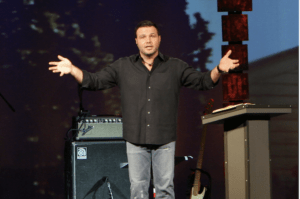
This is the argument of Jason Estopinal. He appeals to Proverbs 10:19, 1 Thessalonians 4:11; Philippians 4:8, Proverbs 3:30, and Matthew 18 and concludes that Christians should not be fascinated by what one critic has called the “failure porn” of the Christianity Today podcast . . . Continue reading →
Keith Getty’s Critique Of Contemporary Worship Music Is A Step In The Right Direction
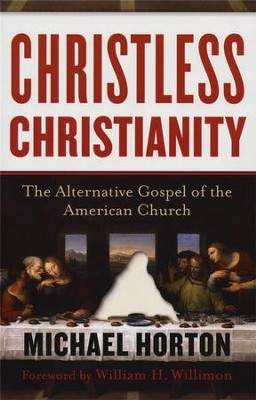
In 2008, Mike Horton called attention to the phenomenon of a radically subjective turn in American evangelicalism, in Christless Christianity. Unfortunately, a single book diagnosing the deep sickness of American evangelical Christianity was not enough to turn the tide. In that volume . . . Continue reading →
Discovering The Reformed Confession: The Real Tony’s Journey To Reformed Theology, Piety, And Practice
All of us have a story, but not all have a “Reformation” story. Here’s mine: I was baptized as an infant and was raised in the American Lutheran Church, which later became a part of the Evangelical Lutheran Church in America (ELCA). . . . Continue reading →
William Perkins On Justification
Perkins objected to Rome’s sacrifice of the Mass. For Perkins, this doctrine was attached to erroneous views of Christology, Christ’s propitiatory suffering unto death, and in turn the doctrine of justification. One of Perkins’s clearest Christological statements is found in his treatise, A Warning Against the Idolatry of the Last Times (1601), where he wrote, “For He in one person is perfect God and perfect man, our only Redeemer all-sufficient in Himself, and therefore perfect king, priest, prophet; without either partner or fellow in the work of man’s salvation.” Continue reading →
Heidelcast 202—What Must A Christian Believe? (19): The Forgiveness Of Sins (1)
This is episode 19 in the series, What Must A Christian Believe? In our survey of the rule of faith, i.e., the Apostles’ Creed, we have reached the tenth article, “the forgiveness of sins.” That phrase does not occur in the earliest . . . Continue reading →
What’s Going on Right Now: Sex, Race, Politics, & Power with Dr. W Robert Godfrey (6)
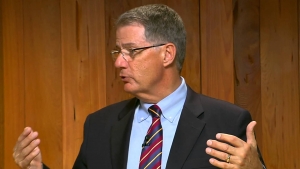
In the sixth session of Bob Godfrey’s Sunday school class at the Escondido URC, he traces the effects of the Enlightenment upon the West. Drawing upon Carl Becker’s work he highlights four key tenets of the movement: (1) that man is not natively . . . Continue reading →