Reformation Day 2013: A Convict, A Commentator, And A Catechism

The good folk at Escondido URC invited me to speak for their Reformation Day celebration. Since it’s the 450th anniversary of the Heidelberg Catechism (this is the Heidelblog, after all) I spoke on the some of the personalities behind the catechism and . . . Continue reading →

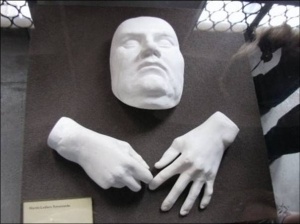
The Freedom of the Christian Man (3)

Luther at the Diet of Worms

Part 2. On 18 April 1521 Martin Luther stood before civil and ecclesiastical authorities at the Diet (Riechstag) of Worms. Heiko Oberman translated Luther’s famous speech thus: “Unless I am convinced by the testimony of the Holy Scriptures or by evident reason—for I . . . Continue reading →

Freedom of the Christian Man (1)

There is a great lot of talk in the evangelical and Reformed world(s) about sola Scriptura but one has the growing sense that not only is the Reformation scripture principle not well understood (e.g., it is often misconstrued as an endorsement of . . . Continue reading →

Bullinger On the Superiority Of The New Covenant

Now in order that I might conceal nothing in this matter, I will briefly mention how the church of Christians, which was established after the birth of Christ, excels. First, we are indeed better off than those who lived under the law . . . Continue reading →

A Response To Rachel Held Evans Regarding Wilson And The Definition Of “Reformed”

Jonathan Merritt published a critique of Doug Wilson this morning on his Religion News Service. For younger readers, who might not remember the Federal Vision (FV) controversy, Wilson is the leader of the de facto denominational home of the FV, the Communion of . . . Continue reading →

Berkhof On The Pedagogical Use Of The Law

. . . b. A usus elenchticus or pedagogicus. In this capacity the law serves the purpose of bring man under conviction of sin, and of making him conscious of his inability to meet the demands of the law. In that way . . . Continue reading →

Crums! You Mean Rome Isn’t Completely Unified?

So just when Jason and the Callers thought they had escaped the unsatisfying clutches of Protestantism, they entered a communion riven by the same kind of divisions that characterized the modernist-fundamentalist controversy. One side wants the church to continue to adapt to . . . Continue reading →

Mystery Unveiled: The Crisis of the Trinity in Early Modern England

In the Reformation and in the period of Reformed orthodoxy, there was no question whether the Christian faith is true. There were great and important questions debated between the Reformed churches and theologians with the Roman communion, the Lutherans, the Anabaptists, and . . . Continue reading →

Heidelcast 46: Conditions And The Covenant Of Grace (Pt 1)

Heidelcast

In Reformed theology we speak of three covenants, the pre-temporal covenant of redemption, the covenant of works, and the covenant of grace. In the covenant of redemption there are two aspects, works for the Son and grace for the elect. The Son was . . . Continue reading →

Owen On The Law In The Garden And On Horeb

Q. 1. Which is the law that God gave man at first to fulfill? A. The same which was afterwards written with the finger of God in two tables of stone Mount Horeb, called the Ten Commandments. John Owen | Greater Catechism . . . Continue reading →

The Intoxicating Power Of Moral Superiority

A while back some of us were discussing the problem of political correctness on university campuses, freedom of thought and speech, and speech codes. If universities were meant to be places of open enquiry, where theories may be proposed and debated, then . . . Continue reading →

Subjectivism As Scholarship

The epistle to Diognetus is an anonymous writing of an uncertain date. …Its claim to be include among the apostolic fathers rests on custom rather than right, for it is probably later than any of the other writings in this group, and . . . Continue reading →

The Sum And The Whole Cause Of Romans

The sum and whole cause of the writing of this epistle is to prove that a man is justified by faith only; which proposition whoso denieth, to him is not only this epistle and all that Paul writeth, but also the whole . . . Continue reading →